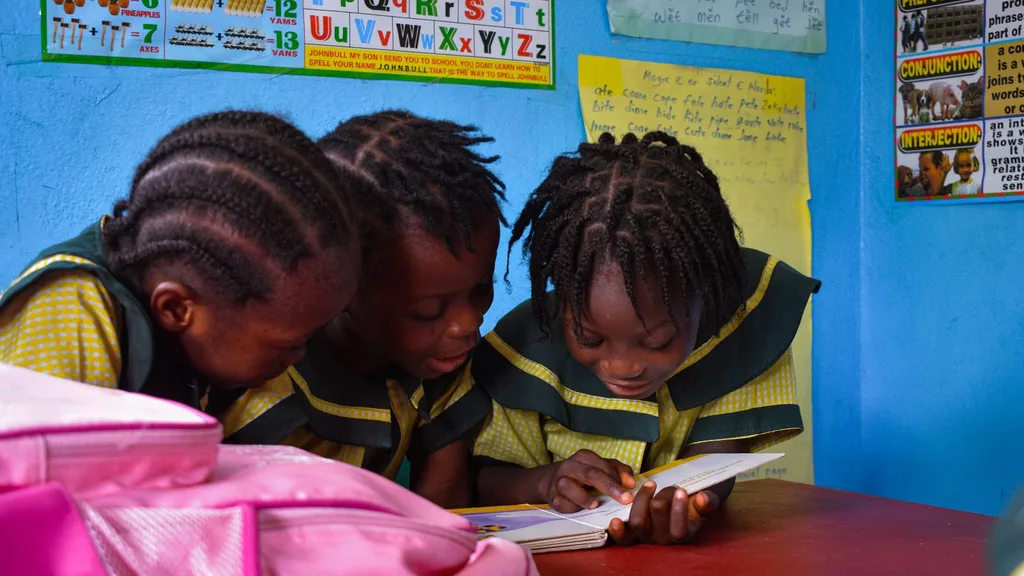
Every one of SDG Bridge Africa's strategic programmes depends, in some way, on people having the skills and knowledge to participate fully in their own development. That is why Education, Skills & Innovation stands as one of our six core programmatic areas — not as a stand-alone concern, but as the foundation that makes the rest of our work possible.
The programme's strategic objective is to expand equitable access to quality education and demand-led skills, and to build effective education-to-employment and innovation pathways for young people — with intentional inclusion of girls, learners with disabilities, refugees and rural learners.
From Access to Employment
- Quality foundational and secondary education: support to early childhood, primary and secondary learning in underserved areas, alongside teacher development.
- Demand-led TVET and skilling: technical and vocational training aligned to real labour-market opportunities, not generic curricula.
- Digital skills, STEM and innovation: digital literacy and innovation hubs co-located with universities.
- Education-to-employment pathways: career guidance, internships, apprenticeships, and tracer studies that follow graduates into the workforce.
- Inclusive education: targeted scholarships and support for girls, learners with disabilities and refugees, plus adult literacy and continuing education.
Education is mainstreamed with climate awareness too — green skills, school WASH, and climate-aware curricula — so learners are prepared for the realities they will actually face.
Education, done well, is not the end of the story — it is what makes every other chapter of sustainable development possible.